Baton · Study 01
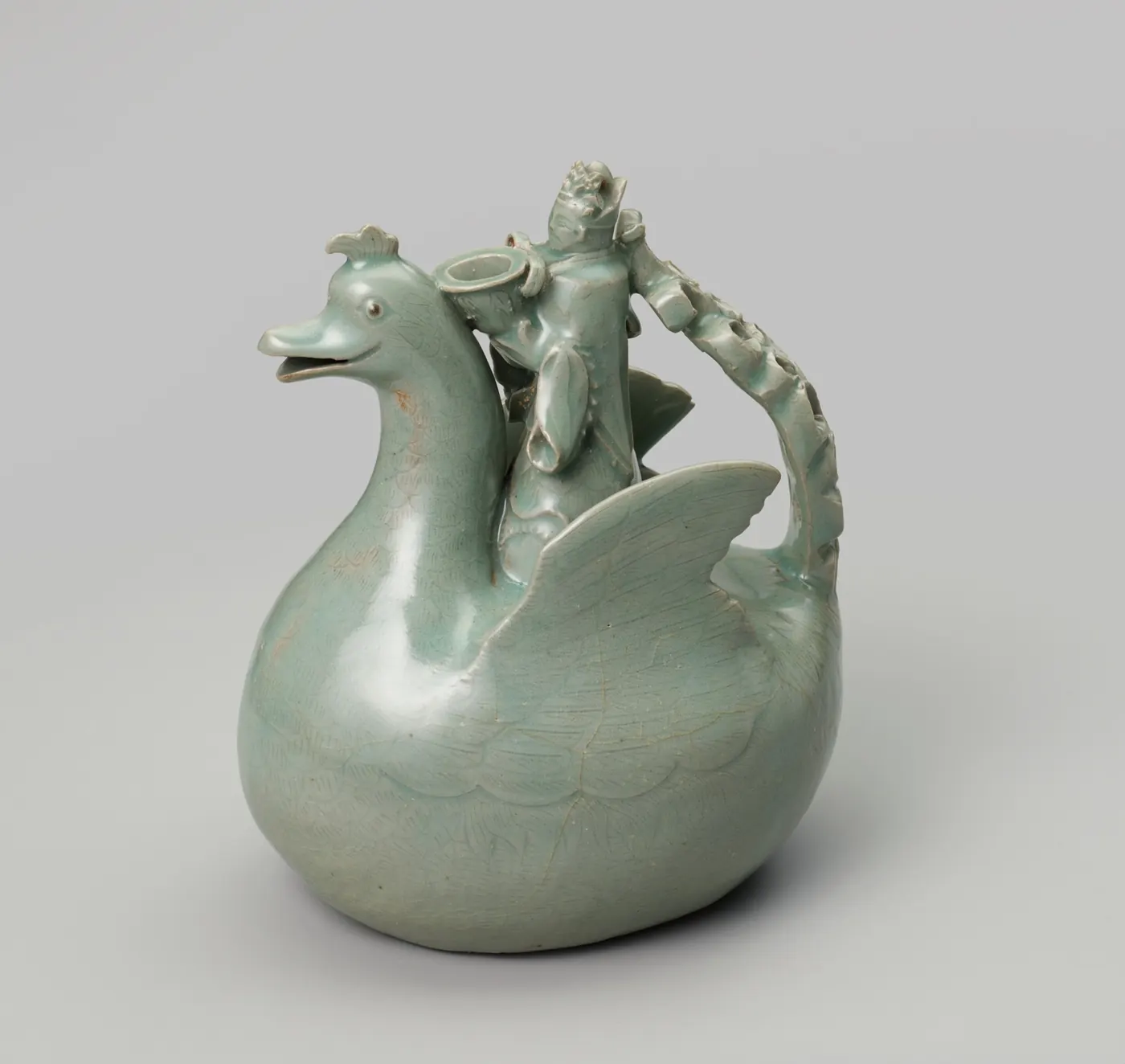
Korean celadon ewer shaped like a duck carrying a Daoist priest, 12th century

Collection Gallery 1, Water

Duck-shaped ewer with a Daoist priest

Date
Goryeo dynasty, 12th century
Place
Korea
Material
Stoneware with celadon glaze and incised decoration under the glaze
Size
21.4 × 17.7 × 13.2 cm

A small figure of a Daoist priest rides on the duck's back. Goryeo potters were known for celadon: the soft grey-green comes from a trace of iron in the glaze, fired in a kiln starved of air.
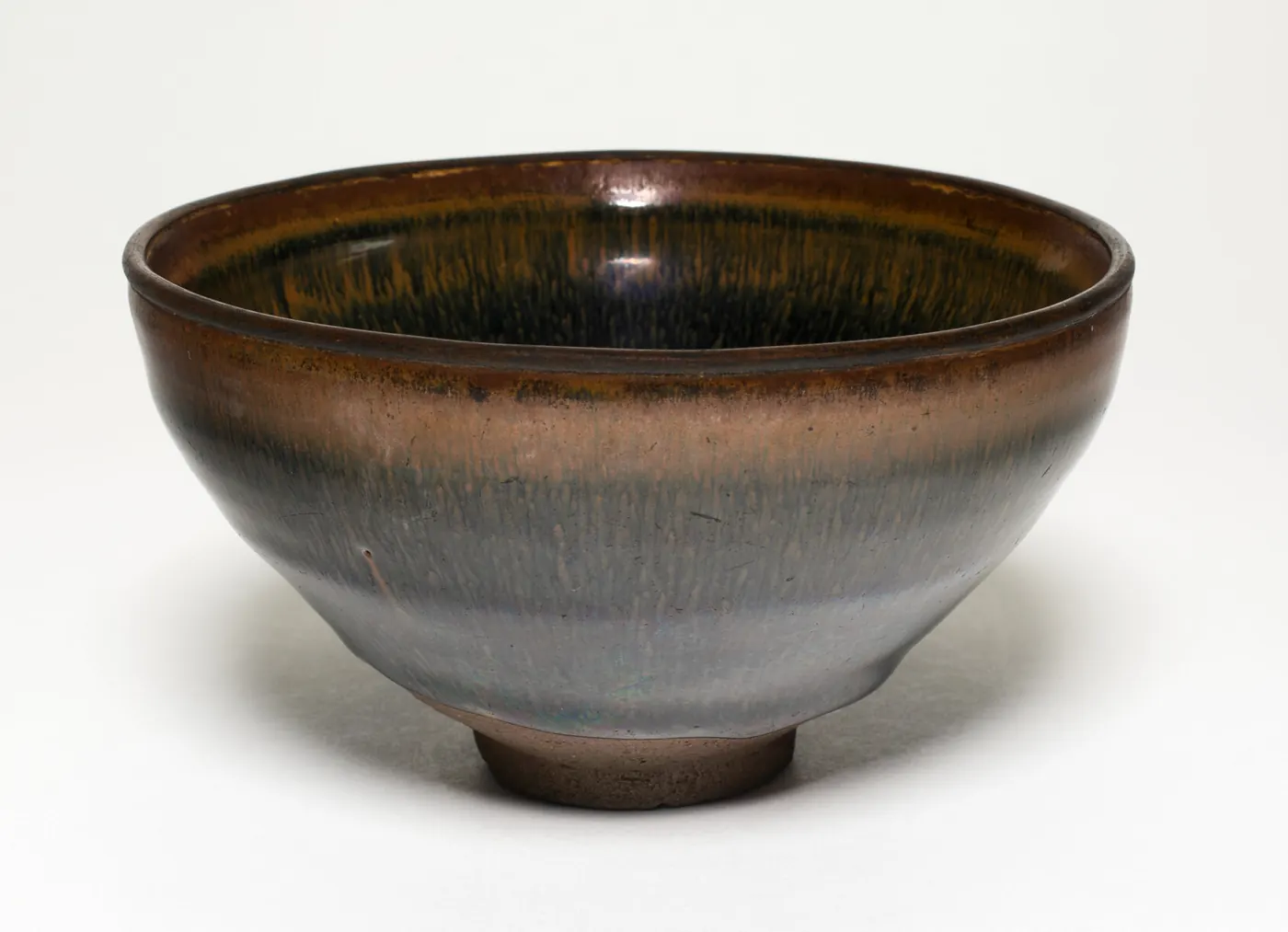
Chinese Jian ware tea bowl with a dark hare's fur glaze, Song dynasty

Collection Gallery 4, Tea

Tea bowl with hare's fur glaze

Date
Song dynasty, 960 to 1279
Place
China
Material
Jian ware: stoneware with a dark brown hare's fur glaze
Size
6.8 × 12.1 cm

Jian ware bowls were made in Fujian for whisked tea, whose pale froth showed best against a dark glaze. The fine streaks that give the glaze its name form as iron separates out of it in the kiln.

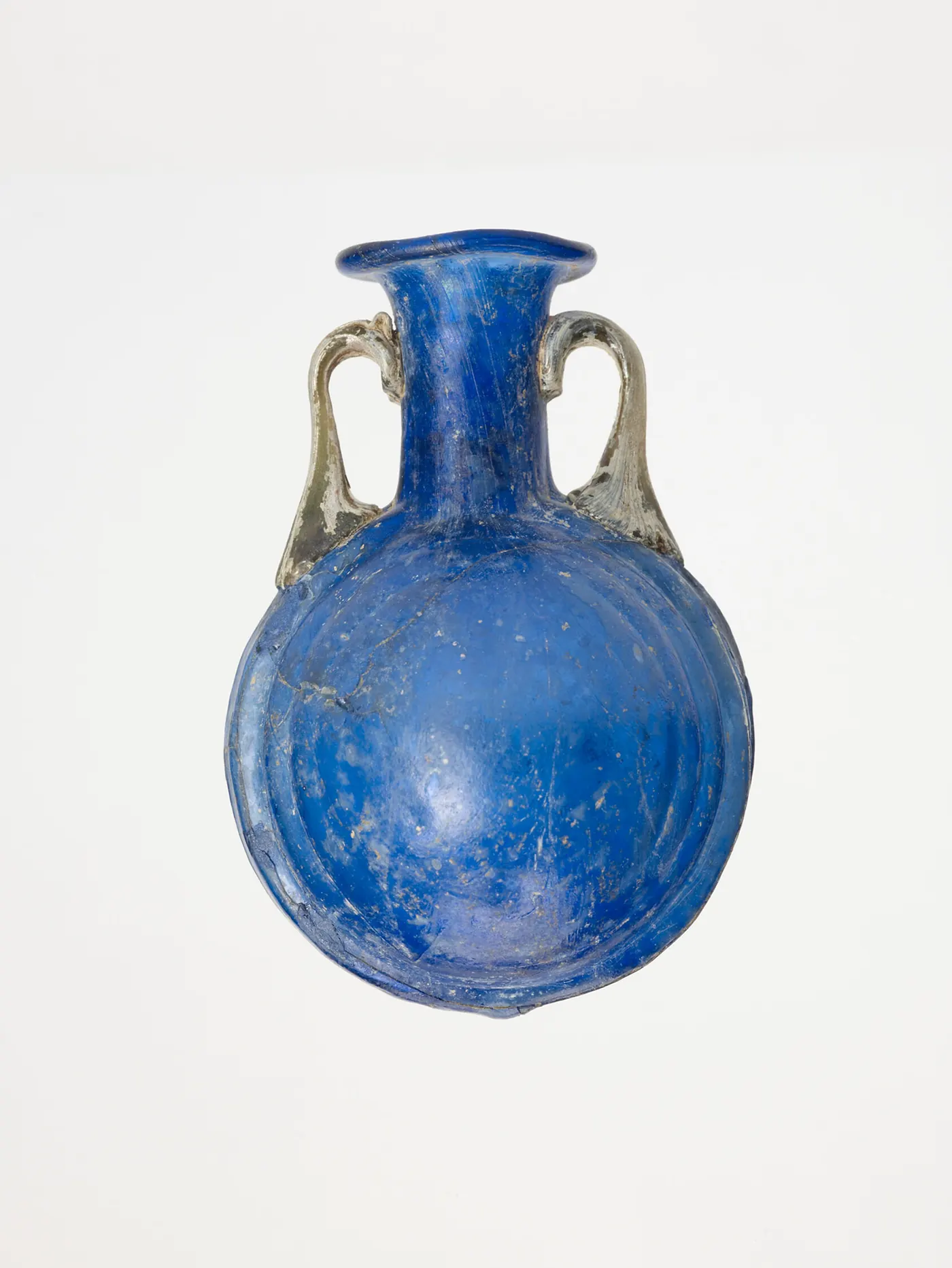
Roman two-handled bottle of mould-blown cobalt blue glass, 1st century

Collection Gallery 5, Light

Mould-blown glass bottle

Date
1st century
Place
Roman Empire
Material
Glass, blown into a mould
Size
8 × 5.5 × 5.1 cm

Small bottles like this held scented oils. Blowing glass into a carved mould let a workshop repeat one shape and pattern many times over, an early way of making identical things.

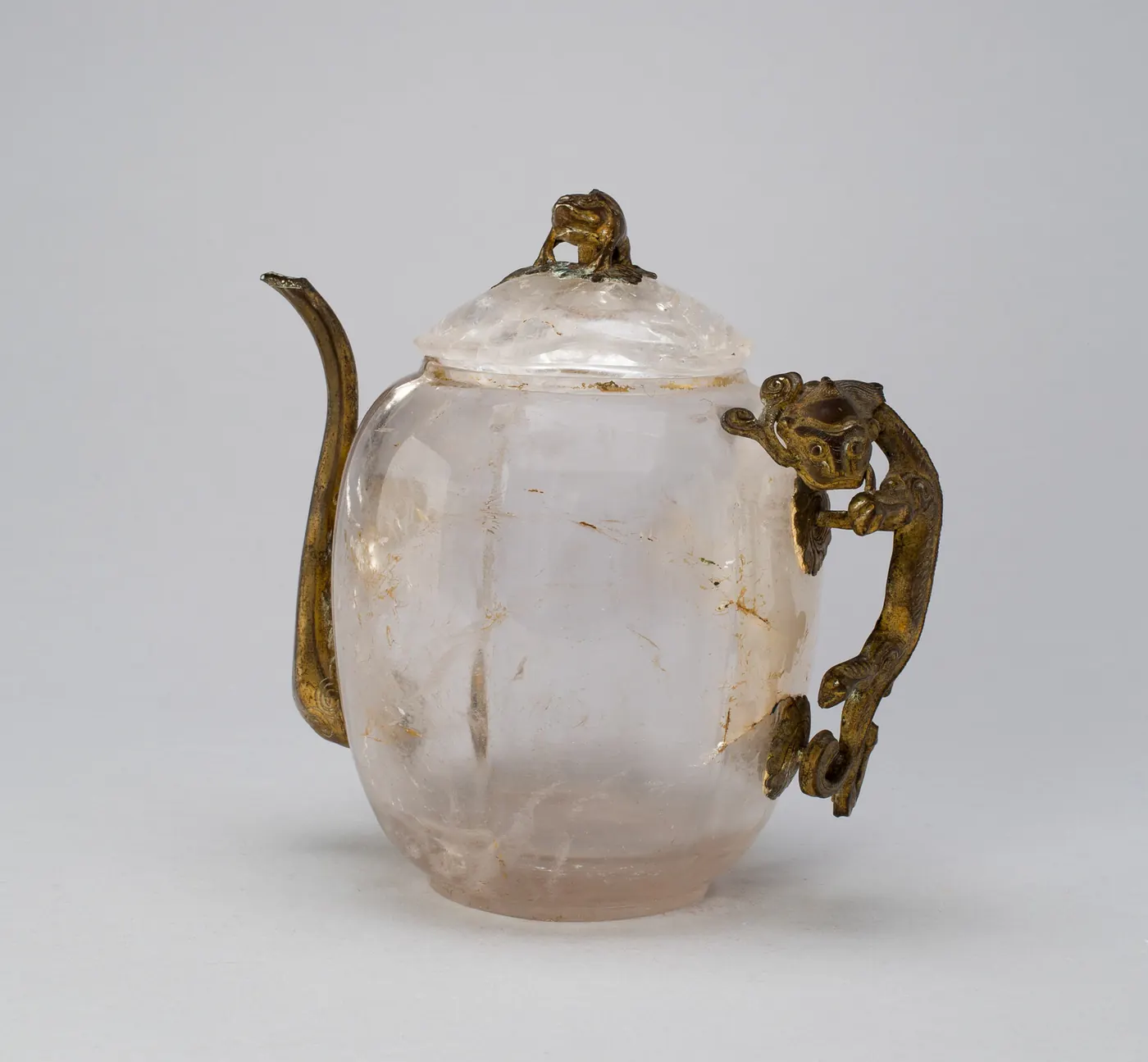
Chinese covered ewer carved from clear crystal, with a handle shaped like a lizard, 18th century

Collection Gallery 3, Wine

Carved crystal ewer with a lizard handle

Date
Qing dynasty, 18th century
Place
China
Material
Crystal with carved decoration
Size
15 × 15.7 × 10.5 cm

Carving a vessel from crystal is slow work, ground and polished rather than cut. The handle takes the shape of a lizard climbing the side, as if to look inside.

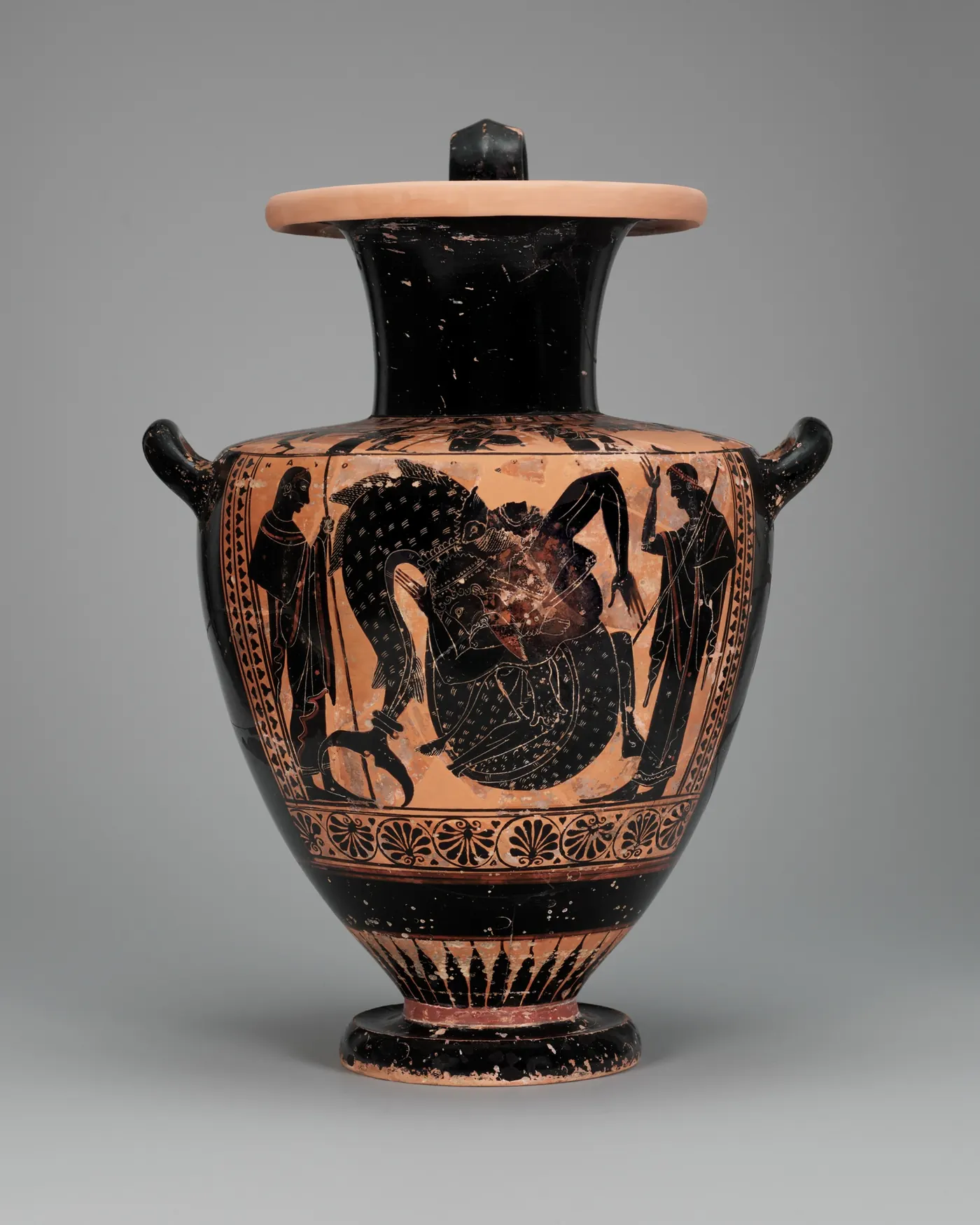
Athenian black-figure water jar, a hydria, about 515 to 500 BCE

Collection Gallery 1, Water

Water jar, a hydria

Date
About 515 to 500 BCE
Place
Athens
Material
Terracotta, painted in the black-figure technique
Size
50.1 × 35 cm

A hydria has three handles: two at the sides for lifting it full, one at the back for pouring. Black-figure painters drew in black slip, then scratched details through it to the clay beneath.

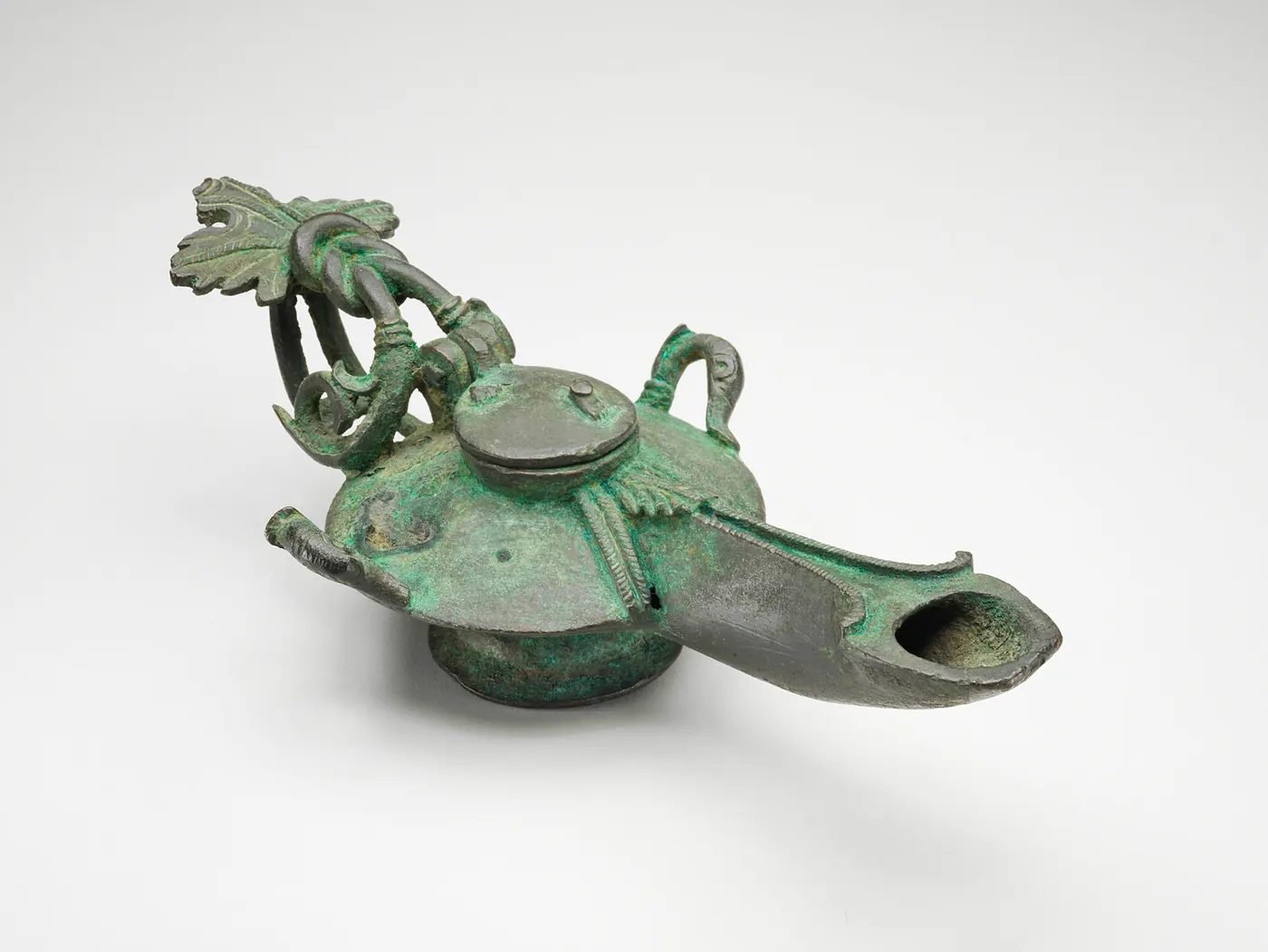
Roman bronze oil lamp with a palm-leaf handle, found in Sri Lanka, 1st or 2nd century

Collection Gallery 5, Light

Bronze oil lamp

Date
1st or 2nd century
Place
Roman, found in Sri Lanka
Material
Bronze
Size
7.8 × 24.9 × 12.9 cm

Oil filled the body and a wick in the nozzle gave a steady flame. Lamps like this travelled with traders on the Indian Ocean routes, which is how one came to be found in Sri Lanka.